

Per the adoption of the Americans with Disabilities Act (ADA), accommodating persons with disabilities is the norm. Twenty-five years after the Act’s passage, the Supreme Court will decide whether it applies to police officers arresting a mentally ill suspect one who is armed and violent. In City & County of San Francisco v. Sheehan the Supreme Court will decide whether, pursuant to the Americans with Disabilities Act (ADA), police must accommodate a suspect’s mental illness when arresting him or her. The...
On Friday the Supreme Court elevated this term from mostly meat and potatoes to historic by agreeing to hear four same-sex marriage cases. The Court will decide whether it is constitutional for states to prohibit same-sex marriage and whether states may refuse to recognize same-sex marriages lawfully performed out of state. While the Court refused to hear a number of cases presenting the same issues earlier in the term, these grants came as little surprise. Between then and now the Sixth...
The City of Roswell lost its case before the Supreme Court on what some might describe as a mere technicality--but overall local governments won. In T-Mobile South v. City of Roswell the Supreme Court held 6-3 that the Telecommunications Act (TCA) requires local governments to provide reasons when denying an application to build a cell phone tower. The reasons do not have to be stated in the denial letter but must be articulated “with sufficient clarity in some other written record issued essentially...
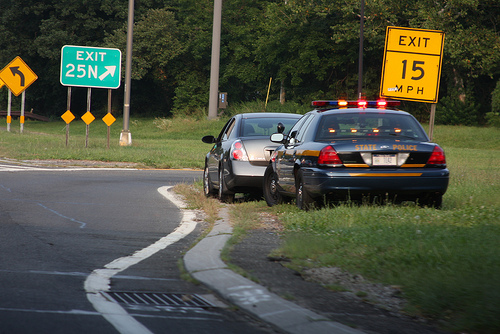
When the vehicle’s occupants behaved suspiciously, the officer asked to search the car. They consented, and the officer found cocaine. The owner of the car argued that the stop violated the Fourth Amendment because driving with one working brake light doesn’t violate North Carolina law.
The Supreme Court has long held that reasonable mistakes of fact do not undermine Fourth Amendment searches and seizures. Justice Roberts reasoned in this 8-1 decision: “Whether the facts turn out to be not what was thought, or the law turns out to be not what was thought, the result is the same: the facts are outside the scope of the law. There is no reason, under the text of the Fourth Amendment or our precedents, why this same result should be acceptable when reached by way of a reasonable mistake of fact, but not when reached by way of a similarly reasonable mistake of law.”
Jesse Busk and Laurie Castro worked at warehouses filling Amazon.com orders. They claimed that they should have been paid for the time they spent waiting and going through security screenings to prevent theft at the end of each shift.
Under the FLSA employers only have to pay “non-exempt” employees for preliminary and postliminary activities that are “integral and indispensable” to a principal activity. According to the Court, an activity is “integral and indispensable” to a principal activity “if it is an intrinsic element of those activities and one with which the employee cannot dispense if he is to perform his principal activities.” The Court concluded that security screenings were not intrinsic to retrieving and packing products and that Integrity Staffing Solutions could have eliminated the screenings altogether without impairing employees’ ability to complete their work.
This case may have implications beyond the specialty license plate context. Lower courts have struggled to determine whether government websites, advertisements on city buses, memorial bricks and tiles at public schools, etc. are government speech or private speech.
Texas allows nonprofits to propose license plate designs for state approval. Texas SCV applied for a specialty plate featuring its logo, a Confederate flag framed on all four sides with the words “Sons of Confederate Veterans 1896,” and a faint Confederate flag in the background. The Board voted unanimously against the plate because it received numerous public comments objecting to it.
The Fifth Circuit ruled in favor of Texas SCV.
Most sign codes, like Gilbert’s, include different categories of temporary signs. It makes sense, for example, to give people more time to remove thousands of election signs and less time to remove a few yard sale signs. In this case the Court will decide whether local governments may regulate temporary directional signs differently than other temporary signs. The Court could rule, practically speaking, that all temporary signs must have the same time, place, and manner requirements. IMLA joined the State and Local Legal Center’s (SLLC) amicus brief asking the Court not to go that far.
Gilbert’s Sign Code includes temporary directional signs, political signs, and ideological signs. After being notified that its temporary directional signs announcing the time and location of church services were displayed longer than allowed, the Good News church sued Gilbert. The church claimed Gilbert’s Sign Code violates the First Amendment because temporary directional signs receive the less favorable treatment (in terms of size, location, duration, etc.) than political signs and ideological signs.
Even though there was no disagreements among the federal circuit courts of appeals at the time, Court watchers were shocked with the Supreme Court denied certiorari in a series of cases striking down same-sex marriage bans. All eyes then turned to the Ninth and Sixth Circuits who had pending cases. The next day the Ninth Circuit struck down Nevada’s and Idaho’s ban. On November 6 the Sixth Circuit became the first federal circuit court to uphold bans in four states...