


The case could directly impact local governments nationwide, particularly those that have adopted sign ordinances with exemptions.
The Court could use this case to clarify when a local ordinance is "content-based" or "content-neutral," a key inquiry under the First-Amendment analysis. A number of law professors filed an amicus brief authored by Professor Eugene Volokh arguing that the Ninth Circuit erred by treating the Town's ordinance as content-neutral. In their view, the ordinance is content-based because it expressly distinguishes the following classes of signs:
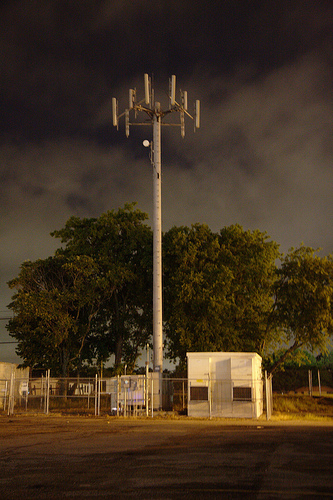
the Supreme Court also decided to hear and answer another question impacting local governments: when a city denies a request to place a cell tower, how formally must it act?
The Court granted cert in T-Mobile South, LLC v. City of Roswell, No. 13-975, which specifically asks what a local government must do to satisfy the Communications Act's "in writing" requirement at 47 U.S.C. 332(c)(7)(B)(iii):
Any decision by a State or local government or instrumentality thereof to deny a request to place, construct, or modify personal wireless service facilities shall be in writing and supported by substantial evidence contained in a written recordAs the Eleventh Circuit explained in its decision, some circuit courts have ruled
The City has now announced that it will ask the U.S. Supreme Court to review the case:
"In our opinion, the panel came up with a new theory of liability under the anti-discrimination laws that has never been recognized before,
This morning, the Supreme Court denied certiorari in Frederick County v. Santos, No. 13-706, a case involving whether local officials may arrest persons for immigration violations that we discussed here. See additional coverage from The Frederick News-Post here. (Photo courtesy of Flickr by Mark Fischer, creative-commons license, no changes made)....
The Fourth Circuit ruled in Santos v. Frederick County Bd. of Comm'rs, 725 F.3d 451 (4th Cir. 2013), that
absent express direction or authorization by federal statute or federal officials, state and local law enforcement officers may not detain or arrest an individual solely based on known or suspected civil violations of federal immigration law.Frederick County's cert petition argues that this creates a circuit split that the Court should resolve:
Last year, this blog discussed three recent courts of appeals decisions involving local-housing regulations aimed at a person's immigration status. This morning, the Supreme Court denied certiorari in two of the cases, Farmers Branch v. Villas at Parkside and Hazleton v. Lozano. Both decisions had preempted local ordinances. Image courtesy of Flickr by prathap ramamurthy (creative-commons license, no changes made)....
A recent cert petition raises an important question about how the federal Constitution limits State and local taxing authority. In Maryland State Comptroller of the Treasury v. Wynne, the Maryland Court of Appeals held that the dormant Commerce Clause requires every state and subdivision to give its residents a full tax credit for all income taxes that they pay in another state or subdivision. The U.S. Supreme Court has never applied the dormant Commerce Clause to reach that result, and it appears to conflict with...